3 hr 30 min
Old Delhi Evening Food Walk
Feast your way through historic lanes as the city lights up for a generous 3.5-hour culinary journey
Reserve
Hand-picked by our editors — only the best 5 food experiences from 23 reviewed.
Verified partners for every tour, free cancellation where available, and instant confirmation on every booking.
3 hr 30 min
Feast your way through historic lanes as the city lights up for a generous 3.5-hour culinary journey
Reserve
4 hr
Sample authentic Delhi cuisine on a 4-hour guided culinary journey through historic neighborhoods
Reserve
5 hr
Dive into India's culinary heart with 11-14 authentic dishes, spice market visits, and cultural stories
ReservePrices from verified partners. Availability updates in real time at checkout. Free cancellation policies apply where shown.
The landmarks, rooms, and views travelers on this tour remember — all visible on a single visit.
Famous lane known for specialized fried flatbread shops with decades of history.
Renowned shop serving iconic syrup-soaked desserts since 1884.
Stunning Mughal architecture overlooking the market area.
A peaceful Sikh temple offering a contrast to the bustling market noise.
They complement each other; most visitors who do both call the guided chandni chowk food walk the more immersive choice for newcomers. While the independent route offers solitude, professional chandni chowk food walk tours provide structural support for navigating Old Delhi.
| Feature | Top pick Organized Food Walk | Self-Guided Tour |
|---|---|---|
Navigation difficulty |
High support provided | High individual effort required |
Food safety confidence |
Curated vendor selection | Personal discretion required |
Cost efficiency |
Fixed fee inclusive of tastings | 0 INR excluding food purchases |
Depth of cultural context |
Expert historical narrative | Reliance on guidebooks or apps |
Flexibility of duration |
Defined by tour schedule | Completely self-paced exploration |
Requirement |
No chandni chowk food walk tickets needed | No chandni chowk food walk tour booking needed |
| See tickets → |
Verdict: Choose the guided experience for specialized insight into the bustling Old Delhi spice markets, or opt for the self-guided path if you prefer total control over your itinerary.
Choose your ticket, select your date, and reserve in under two minutes. Secure checkout handled by our verified partner.
Instant confirmation by email, with a mobile voucher you can save offline. No printing, no queuing at a collection desk.
Arrive at the entrance, show your voucher on your phone, and walk in. Most tickets include priority or skip-the-line access.
Practical details for your visit straight from our verified partners — hours, access, rules, and how to get there.
Near Exit 5
Central location for many chandni chowk food walk tours
Take the Yellow Line of the Delhi Metro to the station.
Modest clothing is recommended when visiting religious sites located within the Chandni Chowk food walk area. Ensure shoulders and knees are covered to respect local customs.
Keep belongings secure in front of you while navigating the crowded alleys of the chandni chowk food walk tour. Avoid bringing large backpacks or suitcases due to limited space.
Photography is generally permitted in public areas of the chandni chowk food walk, but avoid taking photos of individuals without their permission. Respect restricted zones inside private shops or religious shrines.
The narrow, uneven lanes of the Old Delhi culinary trail may present challenges for those with limited mobility. High congestion levels often impact ease of movement throughout the chandni chowk food walk.
Mobile phone signal can be spotty in the deepest lanes of the area. Keep your device tucked away securely when not in use.
Families are welcome, but be prepared for high noise levels and dense crowds. It is advised to keep children close at all times during your Delhi street food excursion.
Sample local delicacies at your own discretion. Maintain hydration by drinking only bottled or sealed water during your chandni chowk food walk visit.
Pets are not recommended due to the extreme crowding, heat, and busy traffic conditions. It is safer for both the animal and visitors to leave them at home.
The atmosphere is intense and sensory-driven. Prepare for significant heat and humidity if visiting during the summer months.
Near Exit 5
Central location for many chandni chowk food walk tours
Get directionsBest time to go, insider tips, nearby landmarks, and the cancellation fine print — flip through to skim what matters to you.
How crowds, weather, and events shift across the year.
Cooler temperatures make for a comfortable experience.
Small details that turn a good visit into a great one.
Joining organized chandni chowk food walk tours provides better safety and guidance.
Non-bookable sights within a short walk — free to visit, easy to pair.
Historic mosque with significant architectural detail.
Flexible, no hidden fees.
Since this is a public street area, there is an entrance fee of 0 INR. No cancellation or refund policies apply for public access.
Hand-picked options within walking distance — pick a district for vibe, or a specific hotel for convenience.
Basic lodging options near the main markets.
Chandni Chowk was commissioned by Mughal princess Jahanara Begum in 1650 as a grand avenue lined with canals reflecting moonlight — the name translates to "moonlit square." Emperor Shah Jahan's capital, Shahjahanabad, centered on this 1,420-meter boulevard, where merchants from Kabul, Bukhara, and Kashmir established trading houses that evolved into the dense labyrinth of 1,500 lanes standing today. The original canal was paved over by the British in the 1850s, but the food culture rooted in those Mughal kitchens endured unbroken. A chandni chowk food walk reveals the district's layered culinary identity. Paranthe Wali Gali, a narrow alley near the Sis Ganj Gurudwara, has hosted paratha vendors since the 1870s — families still fry breads stuffed with mashed potato, paneer, and even rabri on cast-iron tawas fueled by coal. The jalebi shops near Dariba Kalan produce 200 kilograms of the saffron-soaked spirals daily, using recipes unchanged since the late 19th century. Bengali Sweet House, established in 1942, introduced rasgullas and sandesh to a marketplace dominated by Mughlai mithai. Karim's, founded in 1913 near Jama Masjid by descendants of royal cooks, serves mutton burra and nihari in the same copper vessels their great-grandfathers used. The street food economy operates on micro-specialization. One vendor has sold only fruit chaat for 40 years. Another, positioned at the Fatehpuri Masjid corner, exclusively prepares kulfi falooda in terra-cotta matkas that cool the dessert naturally. The spice market at Khari Baoli, Asia's largest, supplies the kitchens — sacks of Kashmiri chili, Tellicherry peppercorns, and dried fenugreek line the 19th-century havelis converted into warehouses. Turmeric dust stains the air yellow every afternoon. Old Delhi street food tours navigate this density with intention. Guides lead groups through dawn markets where vendors prepare dahi bhalla in brass bowls, past the Kinari Bazaar where wedding decorators and halwais share alleyways, and into Ballimaran, the lane where Mirza Ghalib penned Urdu couplets between servings of nihari. The Chandni Chowk food walk tickets grant access to vendor stalls closed to unaccompanied tourists, and the guides negotiate tastings at family-run operations with no shopfront signage. The route typically covers eight to twelve stops across three hours, condensing 370 years of culinary history into a sequence of small plates.
"The original canal was paved over by the British in the 1850s, but the food culture rooted in those Mughal kitchens endured unbroken."
A step-by-step walkthrough of the visit — what you'll see, how long each stage takes, and the details that matter.
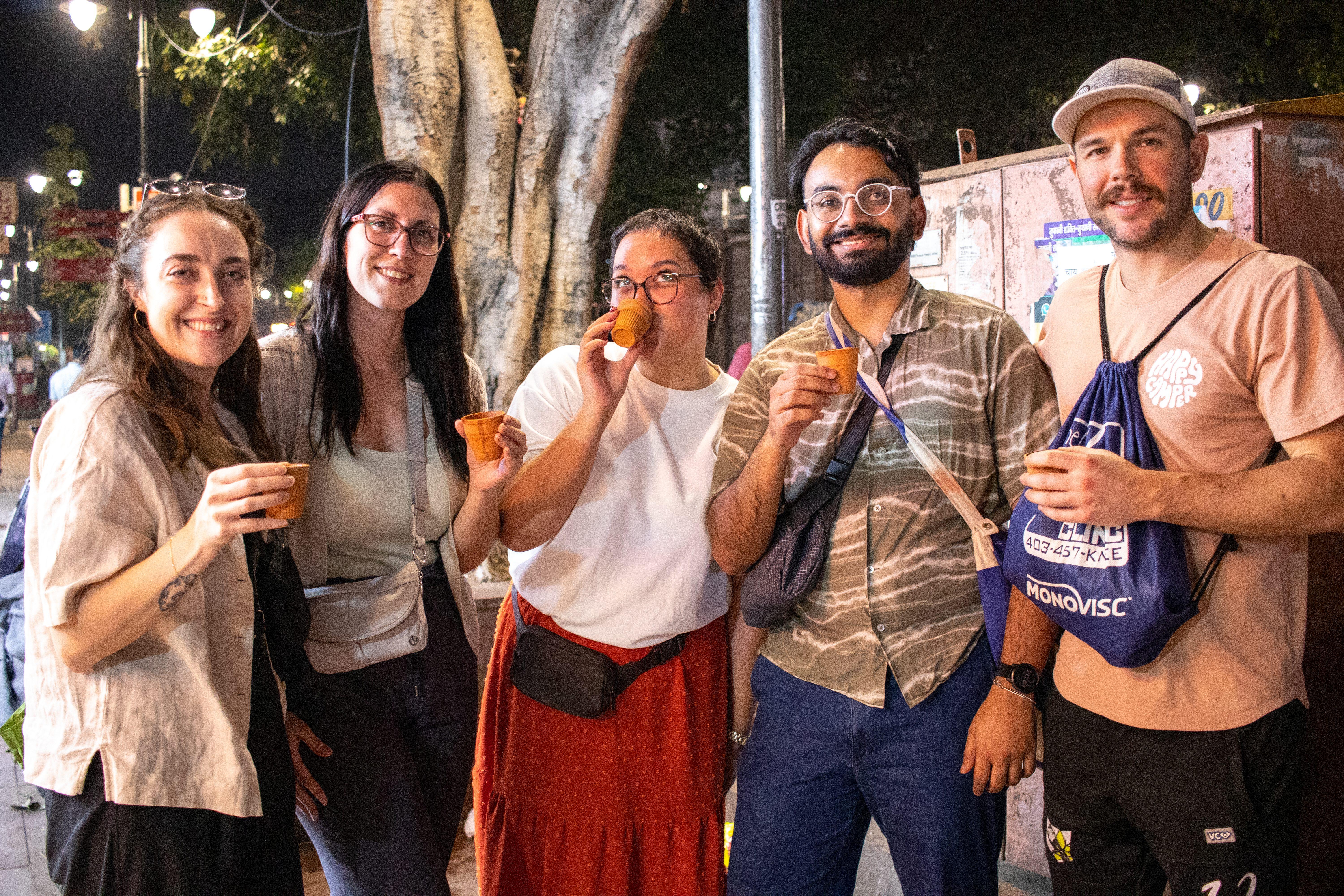
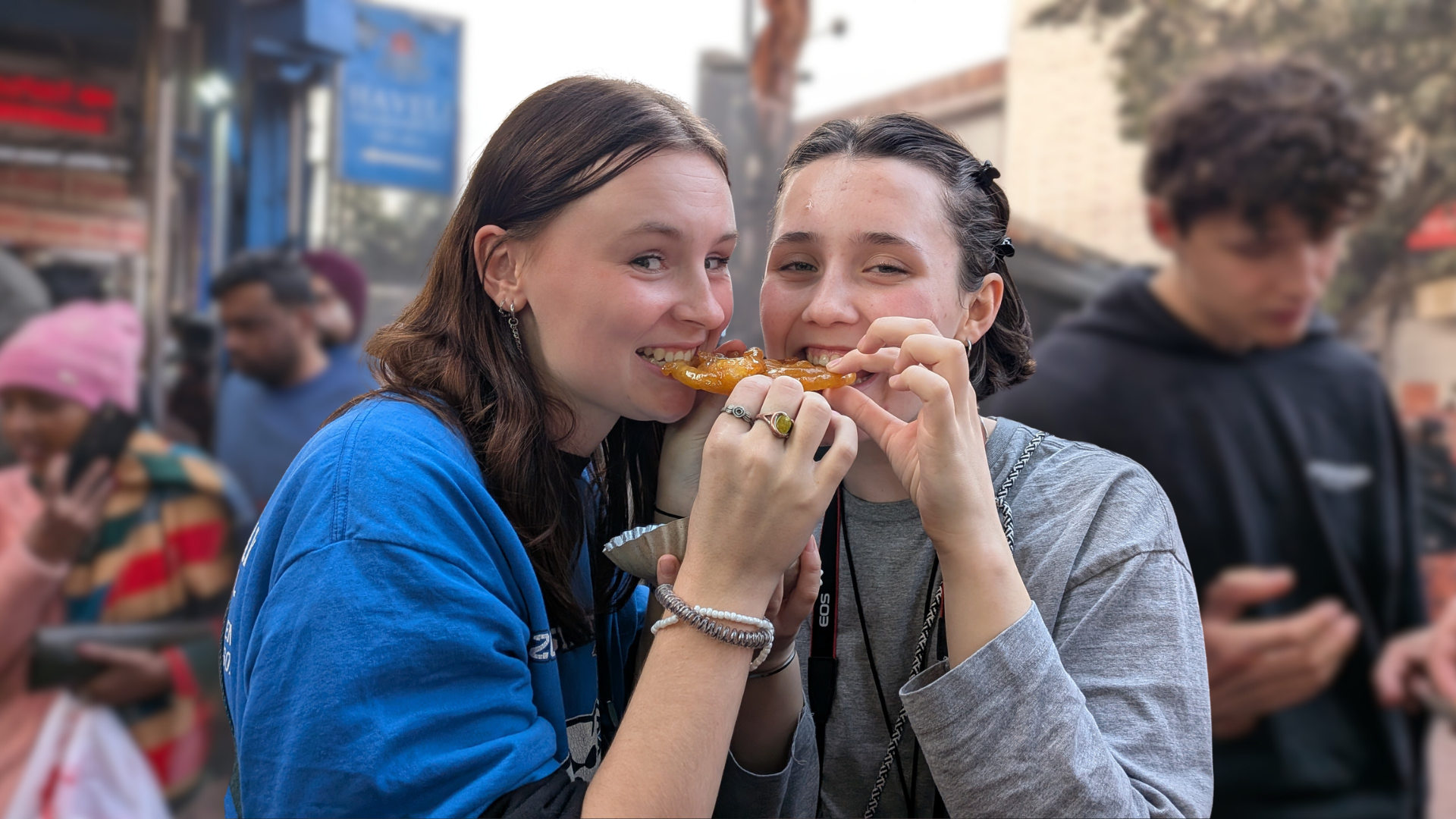
You meet your guide near the Town Hall at 11:00, when the market lanes fill with delivery carts and the scent of fried samosas. Your first stop is a nameless shop where a vendor pours masala chai into clay cups — you drink standing, the way regulars have for decades. You walk east through the silver bazaar, dodging cycle rickshaws, and arrive at Paranthe Wali Gali. The guide orders a potato-stuffed paratha, fried in ghee and served with tamarind chutney and pickled carrots. You eat on a wooden bench shared with shopkeepers on their lunch break. The route turns toward Dariba Kalan. You pause at a jalebi counter where the cook pours batter into boiling oil, forming spirals that crisp in seconds before soaking in saffron syrup. The guide hands you a warm piece on a sal leaf. You continue past spice merchants, their burlap sacks stacked three meters high, and enter a courtyard where a family prepares dahi bhalla in copper vessels. The guide explains the ratio of lentil dumplings to yogurt as you taste. You finish near Jama Masjid with mutton seekh kebabs grilled over charcoal, the fat dripping onto embers. The guide points out the Mughal-era doorways above the shops, remnants of the havelis that once lined the avenue. You leave with turmeric stains on your fingers and the weight of eight tastings.
The area is accessible 00:00–23:59.
There is an entrance fee of 0 INR as this is a public street area.
Avoid large backpacks that hinder movement in narrow lanes.
Crowds are heaviest during the 11:00–20:00 peak activity window.
Yes, you may photograph public scenes during your chandni chowk food walk.
The best arrival window is 11:00–20:00 for the most authentic experience.
Children are welcome, though the experience is best for older kids due to the environment.
Take the Delhi Metro Yellow Line to the station.
Yes, you can easily access Jama Masjid and the Red Fort nearby.